- ✓Distance control first. Most three-putts come down to pace, not line.
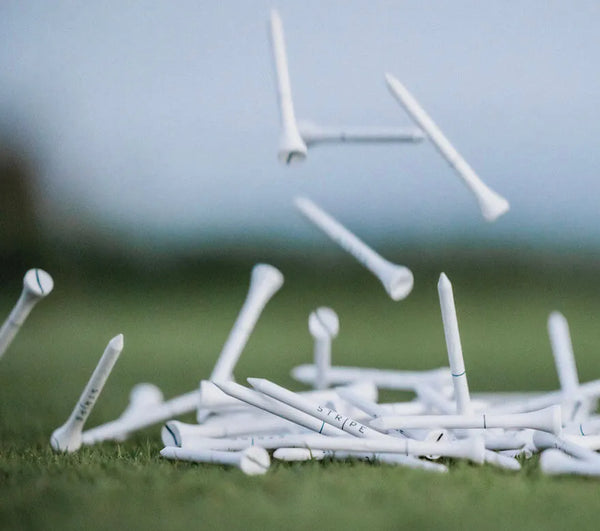
- ✓Use alignment sticks or tees to check that your putter points where you think it does.
- ✓Keep score. It makes the drill feel more like a real round.
Why practice putting?
A one-meter putt counts the same as a 250-meter drive. Yet the putting green is the emptiest place at the club.
Here are three drills you can get through in twenty minutes. Each one has a score, so you'll know if you're getting better.
Drill 1: Distance control
The goal is to get a feel for how hard to hit it. Focus on pace, not on holing every putt.
-
1
Mark a zonePlace tees in a ring around the hole, at the distance where you make nearly every comeback putt. For most players that's about half a meter.
-
2
Three distancesSet tees at three, four and five meters from the hole.
-
3
Five balls per distanceStart with the shortest. One point for every holed putt, minus one for every ball that stops outside the zone.
Write down your score. Repeat the drill next time and try to beat your record. Try a few putts with your eyes closed, too. It forces you to feel the pace instead of seeing it.
Drill 2: Alignment
If the putter isn't aimed right, it doesn't matter how good the stroke is. Lay two alignment sticks parallel and putt between them. You'll see right away if the face opens or closes.
-
1
Pick a gentle breakerTwo to three meters, a putt you should make more often than not.
-
2
Mark your aim pointPush a tee into the green beside the hole, where you're aiming.
-
3
Ten puttsLine up every putt to the tee. How many of ten do you make?

Drill 3: Putt around an obstacle
Put a tee or another small object on your line. Now you have to read the green and pick a line that goes around it. It trains green reading in a way straight putts never will.
-
1
Place the obstacleA tee or a ball marker right on the natural line.
-
2
Two distancesPutt from two different distances.
-
3
ScoringOne point for a make, zero for a miss, minus two if you hit the obstacle.
"No putter holes putts on its own. But it can look good while you try."
Stripe Golf
Your putter deserves some care, by the way. A putter headcover keeps the head free of scratches in the bag.
Putting basics
Before the drills can help, the basics need to be in place. They're simple, but easy to drift away from.
- Eyes over the ball. Or just inside it. Then you see the line as it really is.
- Pendulum motion. The shoulders do the work. Hands and wrists go along for the ride but don't steer.
- Same tempo. Backstroke and through-stroke about the same length. Longer putts get a longer stroke, not a harder hit.
- Still head. Keep looking at the spot where the ball was for a moment after impact. Harder than it sounds.
Read the green
Start reading as you walk up to the green. That's when you see the slope best. Look at where water would drain off.
Then read the putt from behind, ball to hole. On longer putts, check from the other side too. Commit to a line and a pace, and trust it. A half-hearted putt misses more often than a committed putt on the wrong line.
A twenty-minute pre-round routine
-
1
Long putts (5 min)Putt to the fringe from different distances. Find the pace of today's greens.
-
2
Start line (5 min)Set two tees as a gate just in front of the ball. Putt through the gate from one meter.
-
3
Short putts (5 min)Hole ten in a row from one meter. The sound of the ball in the cup does more for your confidence than you'd think.
-
4
Finish strong (5 min)A few putts from two meters, full routine. End on a make.
Practice putting at home
A putting mat or a straight stretch of hardwood floor goes a long way. Work on start line and tempo. A glass on the floor makes a fine hole. Five minutes a day beats an hour once a month.
What you can't practice at home is the pace of real greens. For that, you'll need the putting green.
Track your putts
Count your putts per round and write them down. Note how many three-putts you have, and from what distance. After a few rounds you'll see whether the problem is pace or the short ones. Then you know which drill deserves the most time.
Putting in wind and rain
Wind affects putts more than most people think, especially on fast greens and long putts. Widen your stance a little for stability and expect the ball to drift slightly with the wind.
Wet greens are slower. Hit it a bit firmer and expect less break. Wipe the ball and the putter face before every putt. A little water between face and ball can make contact unpredictable.
Frequently asked questions
How often should I practice putting?
Little and often beats a lot and rarely. Ten minutes before every round makes a big difference.
What matters more, line or pace?
Pace. A putt with the right speed and a slightly wrong line finishes close. A putt with the right line and the wrong speed doesn't.
Do I need alignment sticks?
Tees work too. Alignment sticks make it clearer and double as an alignment aid on the range.
Should I use a special grip?
There are several good grips. Pick the one that keeps your wrists quiet and the face square.
How firmly should I hit short putts?
Firm enough that the ball would roll about half a meter past the hole if it missed.